

Rethinking Transportation Strategy at the Highest Level
For decades, companies have framed transportation decisions around a single question:
“Should we own our fleet or outsource it?”
Ownership is not a strategy.
It’s a structure—one of many.
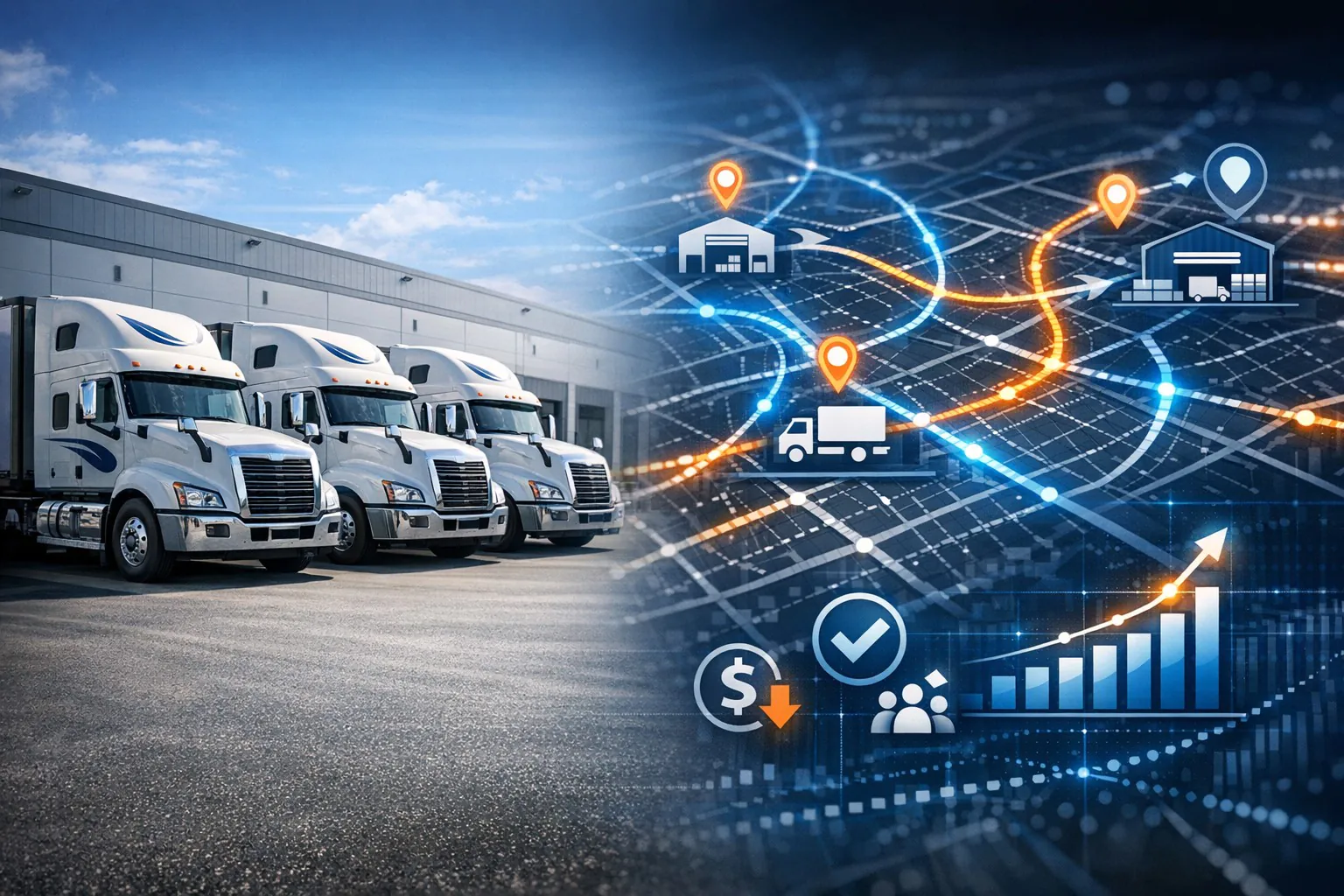
A modern transportation strategy centers on outcomes: capacity reliability, cost predictability, service performance, risk reduction, and scalability.
This awareness-stage perspective reframes the fleet conversation by comparing ownership models with outcome-driven strategies—and explaining why leading organizations are shifting their thinking.
Most logistics teams evaluate fleet models in binary terms:
These models define who owns assets and who manages execution. But they don’t guarantee performance.
A private fleet can struggle with:
A dedicated or outsourced model can struggle if expectations, metrics, and visibility are unclear.
Ownership is only part of the equation.
It sets the framework—but not the outcome.
Rather than starting with “Should we own trucks?” modern organizations begin with:
What outcomes does our transportation strategy need to deliver?
Common strategic outcomes include:
When companies focus on outcomes first, ownership becomes a tool—not the strategy.
The real question becomes:
“Which model delivers these outcomes most effectively and consistently?”
Private fleets often play a critical role, especially where control and service precision are essential. But ownership also introduces challenges that can dilute performance:
Fixed Costs
Assets come with depreciation, insurance, maintenance, and capital tied up for years.
Labor Management
Recruiting drivers, retaining them, and ensuring compliance becomes an ongoing HR and safety burden.
Design Drift
Routes and utilization degrade over time if not actively managed with data and continuous optimization.
Scalability Limits
Peaks, valleys, and seasonal surges challenge fleets sized for average demand.
These factors often push organizations to rethink whether owning trucks is the best path to the outcomes they want.
An outcome-driven transportation strategy focuses on what matters most:
service, cost, reliability, and risk management.
Here’s how that shifts the equation.
Performance is tracked through KPIs and SLAs—not assumptions or anecdotes.
When assets and labor aren’t fixed solely to your books, costs become easier to manage and forecast.
Networks can scale through a mix of dedicated, supplemental, and surge capacity.
Regulatory, safety, labor, and maintenance risks shift away from the shipper and toward the provider.
Strategy becomes about achieving results, not managing assets.
Forward-thinking organizations don’t choose one model—they design an integrated transportation strategy using multiple levers:
This approach unlocks:
This is transportation strategy at its most effective: outcome-first, model-second.
When companies focus solely on fleet ownership, they risk missing the bigger picture.
When they focus on operational outcomes, they gain:
The most successful organizations aren’t asking,
“What fleet model should we use?”
They’re asking,
“Which combination of models delivers the outcomes we need to compete and grow?”
Ownership matters—but outcomes matter more.
Learn more about what makes Keller Logistics Group and its affiliates the best choice for your company’s 3PL logistics needs. Contact us to learn more about our services and request a no-obligation quote. Call 419-780-3767 or return our online contact form today.