

Overview
Many organizations face the same challenge: rising costs, labor shortages, and unpredictable demand patterns, putting pressure on private fleets. For one midwestern manufacturer, these forces converged into a simple but urgent goal—move the same volume of freight, or more, with fewer trucks.
This case study demonstrates how a thoughtful, data-driven approach to fleet optimization delivered measurable gains without compromising service.
A regional building-materials manufacturer operated a fleet of 38 power units covering outbound deliveries to retail and jobsite locations across five states. Over time, the network became increasingly strained:
Operational Symptoms
What Leadership Saw
On paper, the fleet looked fully utilized. Trucks were moving. Drivers were busy. Costs seemed stable.
But when operations, finance, and customer service leaders compared notes, they realized they were compensating for inefficiencies—not solving them.
The question became: How can we reduce the asset footprint while protecting service reliability?
A full fleet optimization assessment was launched, starting with comprehensive data collection across routing, miles, labor, equipment, and customer requirements. Four major levers emerged.
Analyzing historical delivery patterns revealed that routes had drifted over time—what began as efficient clusters had grown into sprawling territories.
Actions Taken
This alone cut weekly miles by 11%.
Actions Taken
Driver efficiency improved without increasing work hours.
Maintenance logs and telematics data showed multiple under-performing units contributing to downtime and inflated costs.
Actions Taken
This reduced unplanned maintenance events by 39% in the first 60 days.
Dispatchers were still working from tribal knowledge, whiteboards, and manual adjustments. Adding real-time visibility changed the game.
Actions Taken
This simple visibility shift significantly reduced late deliveries tied to avoidable schedule slippage.
After a 12-week stabilization period, the results were clear and quantifiable.
Fleet Reduction With No Loss of Capacity
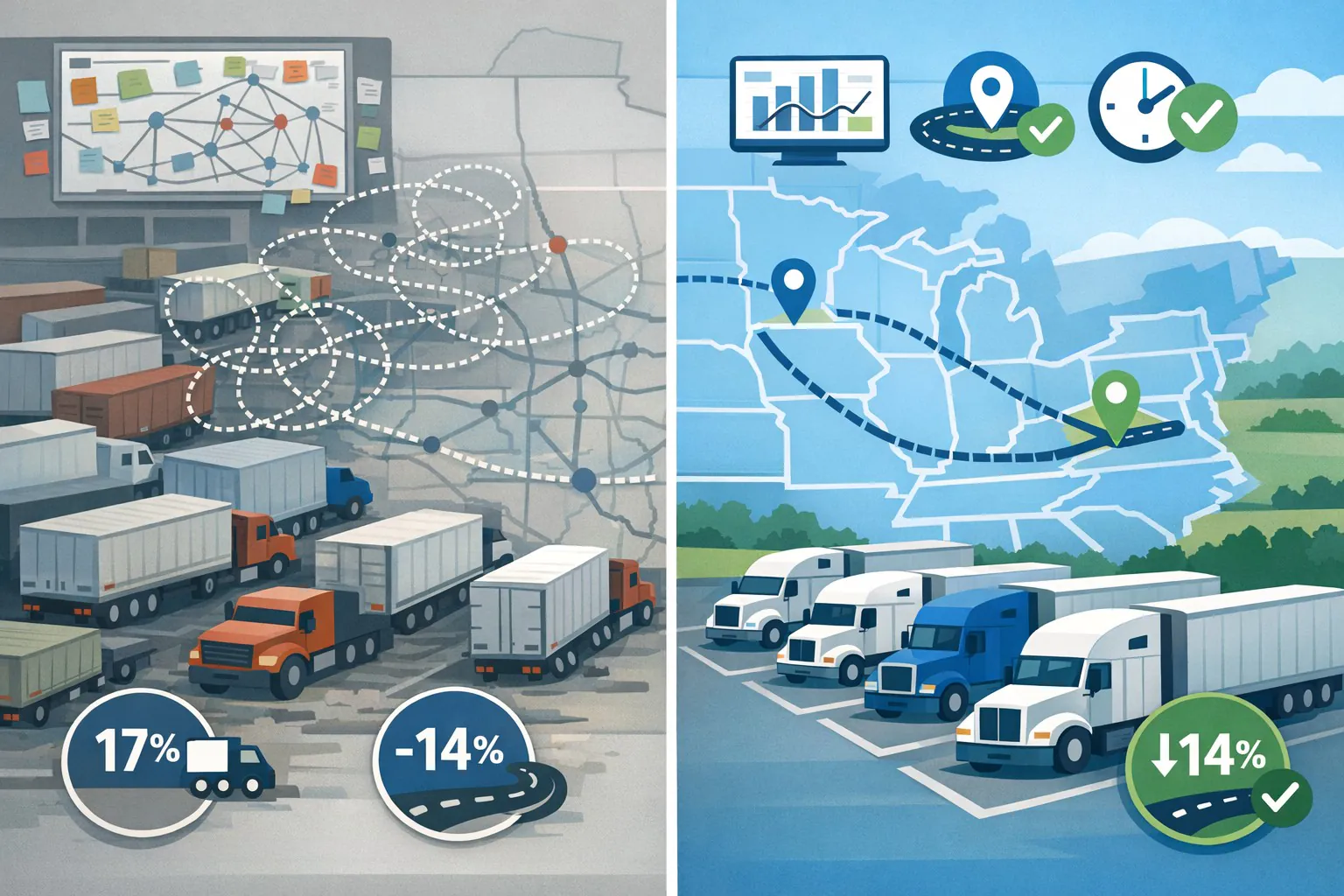
The fleet was reduced from 38 trucks to 31—a 17% reduction—with no negative impact on customer service.
Mileage Efficiency Gains
Total miles dropped 14%, driven by improved routing and better load planning.
Reduced Reliance on Outside Carriers
Spot market usage decreased 33%, saving budget and increasing consistency.
Stronger On-Time Performance
On-time delivery improved from 92% to 97%, despite operating with fewer assets.
Maintenance Cost Improvements
With strategic asset retirements and clearer scheduling, maintenance spend decreased 22% in the first six months.
Driver Experience Improved
Drivers reported:
Turnover dropped, easing labor pressure and creating a more stable base of experienced drivers.
Conclusion: Fleet Optimization Isn’t About Doing More Work
It’s about doing the right work, with the right assets, arranged in the right way.
This case study demonstrates a simple truth:
Most fleets aren’t suffering from lack of effort—they’re suffering from inherited inefficiencies.
By stepping back, analyzing real data, and making targeted adjustments, this manufacturer unlocked measurable performance gains—while operating with seven fewer trucks.
The takeaway for any organization exploring fleet optimization:
Improvement doesn’t always require expansion. Sometimes the greatest efficiencies come from strategically reducing assets while elevating performance.
More information about Fleet Optimization:
https://kellerlogistics.com/blog/when-to-rebuild-or-replace-your-fleet-strategy/
https://kellerlogistics.com/blog/how-keller-converts-fleets-without-disruption/
https://kellerlogistics.com/blog/why-fleet-conversions-fail-and-how-to-avoid-it/
https://kellerlogistics.com/blog/private-fleet-vs-dedicated-fleet-the-real-math/
Learn more about what makes Keller Logistics Group and its affiliates the best choice for your company’s 3PL logistics needs. Contact us to learn more about our services and request a no-obligation quote. Call 419-780-3767 or return our online contact form today.