

A Decision-Stage Framework for Smarter Fleet Analysis
As transportation networks become more complex and market pressures grow, many organizations are asking whether their current fleet model is still the right one. Rising costs, labor challenges, shifting customer expectations, and ongoing volatility have made fleet analysis a critical part of strategic planning—not just a periodic operational review.
But evaluating a fleet effectively requires more than looking at cost per mile or total equipment count. High-performing organizations use a more comprehensive framework—one that helps them understand whether their fleet is optimized, resilient, and capable of supporting future growth.
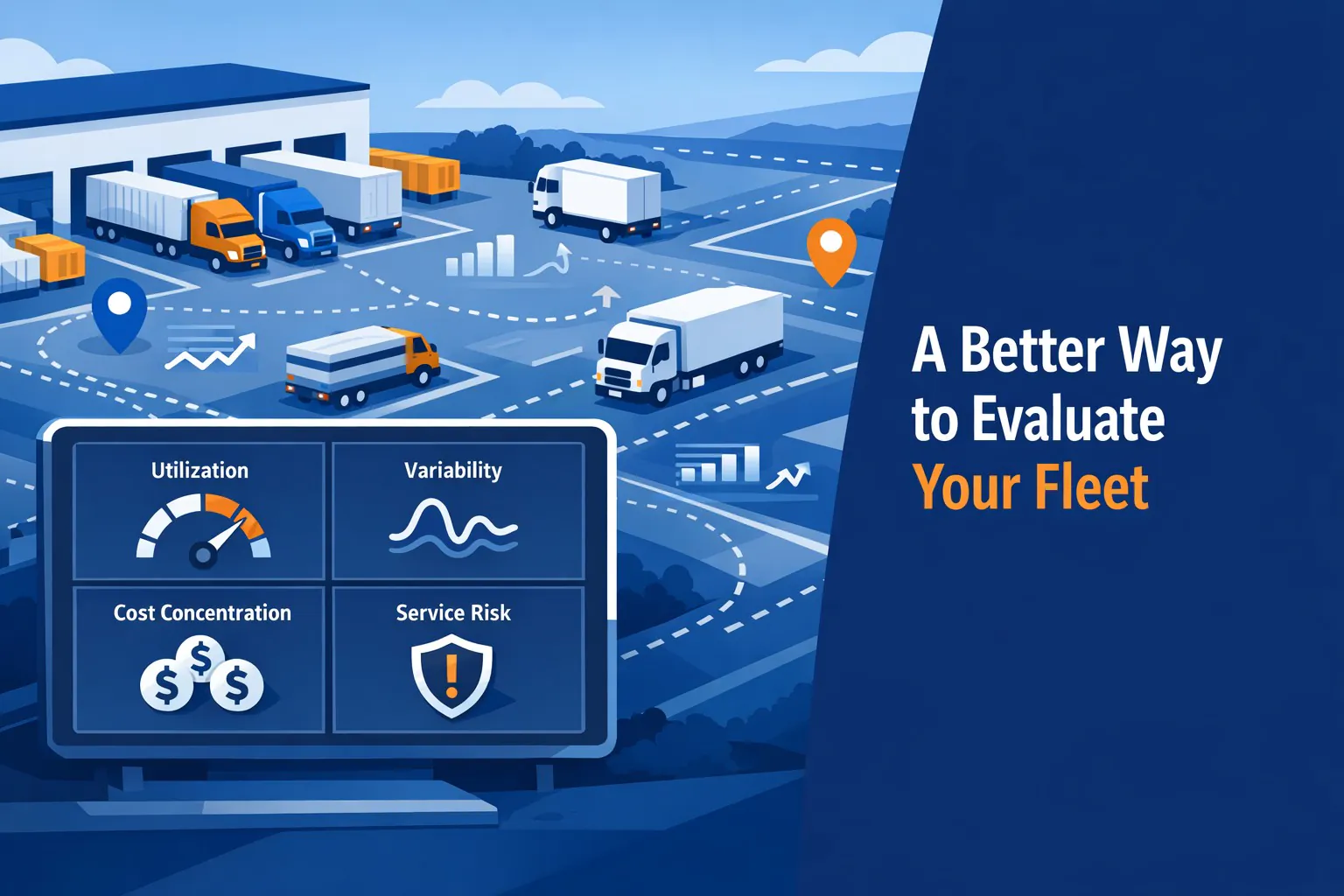
Below is a structured approach using four essential pillars:
Utilization, Variability, Cost Concentration, and Service Risk.
Under-utilized assets are one of the biggest hidden drains on fleet performance. Vehicles that run inconsistent miles, sit idle between loads, or operate far below their capacity drive up fixed costs without corresponding value.
A utilization-focused fleet analysis considers:
Signs utilization may be an issue:
Even well-optimized fleets struggle when demand is highly variable. Fluctuations in freight volume, order patterns, or facility schedules can create misalignment between fixed fleet capacity and real-world needs.
A variability-centered fleet analysis asks:
High variability often leads to:
Most organizations track fleet cost categories, but far fewer identify where costs are disproportionately concentrated. Effective fleet analysis highlights the expense areas that pose the greatest risk or opportunity.
Key elements of cost concentration include:
A strong cost analysis doesn’t simply report numbers—it reveals patterns.
Indicators of cost concentration problems include:
This clarity helps leaders determine whether reinvestment, restructuring, or conversion to a dedicated model would reduce financial exposure.
Service failures—late deliveries, missed appointments, or inconsistent performance—can damage customer relationships and increase total cost to serve. A comprehensive fleet analysis identifies where service risk exists and what factors contribute to it.
Service risk evaluation includes:
High service risk often presents as:
Assessing service risk helps organizations understand whether the current fleet structure can reliably scale—or whether a new operational model is needed.
The goal of fleet analysis isn’t just to understand current performance. It’s to determine whether your fleet model still aligns with your business strategy.
By evaluating fleets through the four-pillar framework—utilization, variability, cost concentration, and service risk—leaders gain a clear, actionable picture of where their fleet excels, where it struggles, and what opportunities exist for improvement.
Organizations that embrace this structured approach are better positioned to:
Fleet analysis is no longer optional. It’s a strategic advantage.

Learn more about what makes Keller Logistics Group and its affiliates the best choice for your company’s 3PL logistics needs. Contact us to learn more about our services and request a no-obligation quote. Call 419-780-3767 or return our online contact form today.