
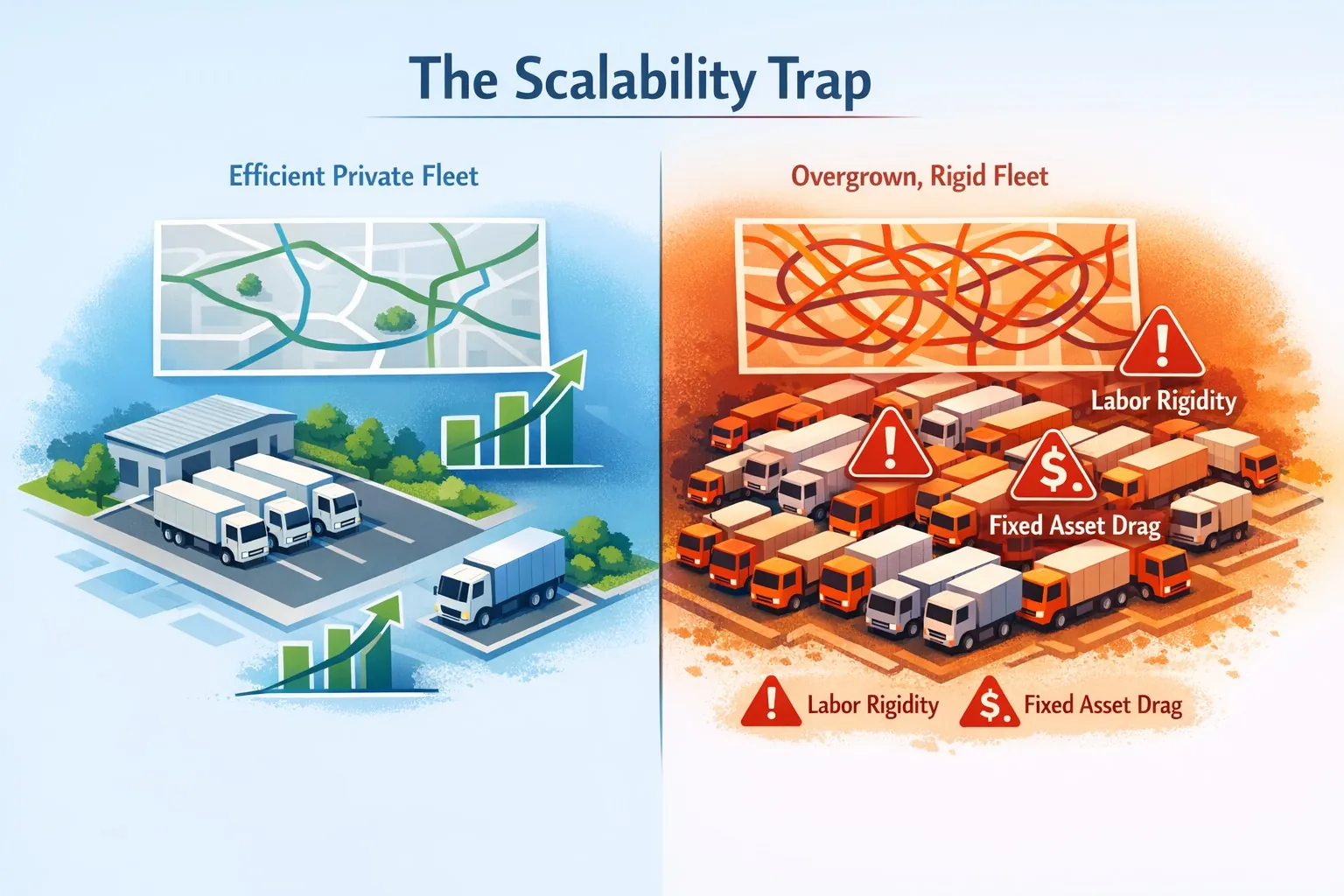

The Scalability Trap
Private fleets often start strong. In the early stages, adding trucks and drivers feels like a straightforward way to meet growing demand. But as volumes fluctuate and markets shift, that growth model begins to break down. What once seemed scalable can quickly become rigid, costly, and inefficient.
Why Fleets Scale Well—At First
But this model assumes demand will keep climbing steadily. Reality rarely works that way.
The Breaking Point: When Growth Turns to Drag
As demand becomes unpredictable, private fleets face two major challenges:
1. Labor Rigidity
2. Fixed Asset Drag
The Scalability Illusion
Owning more trucks doesn’t mean you can flex up or down easily. In fact, it often locks you into:
True scalability isn’t about adding assets—it’s about adapting to change.
Fleet scalability isn’t guaranteed by ownership. It requires a strategy that accounts for fluctuating demand, labor dynamics, and cost control. Recognizing when your fleet has stopped scaling is the first step toward building a more resilient model.

Learn more about what makes Keller Logistics Group and its affiliates the best choice for your company’s 3PL logistics needs. Contact us to learn more about our services and request a no-obligation quote. Call 419-780-3767 or return our online contact form today.