

A Proven, Process-Driven Approach to Private Fleet Conversion
For many shippers, private fleet conversion is an essential strategic move—unlocking cost savings, improving service reliability, and reducing the operational risks tied to owning and managing assets. But the transition itself can feel daunting. Leadership teams often ask the same questions:
This is where Keller stands apart.
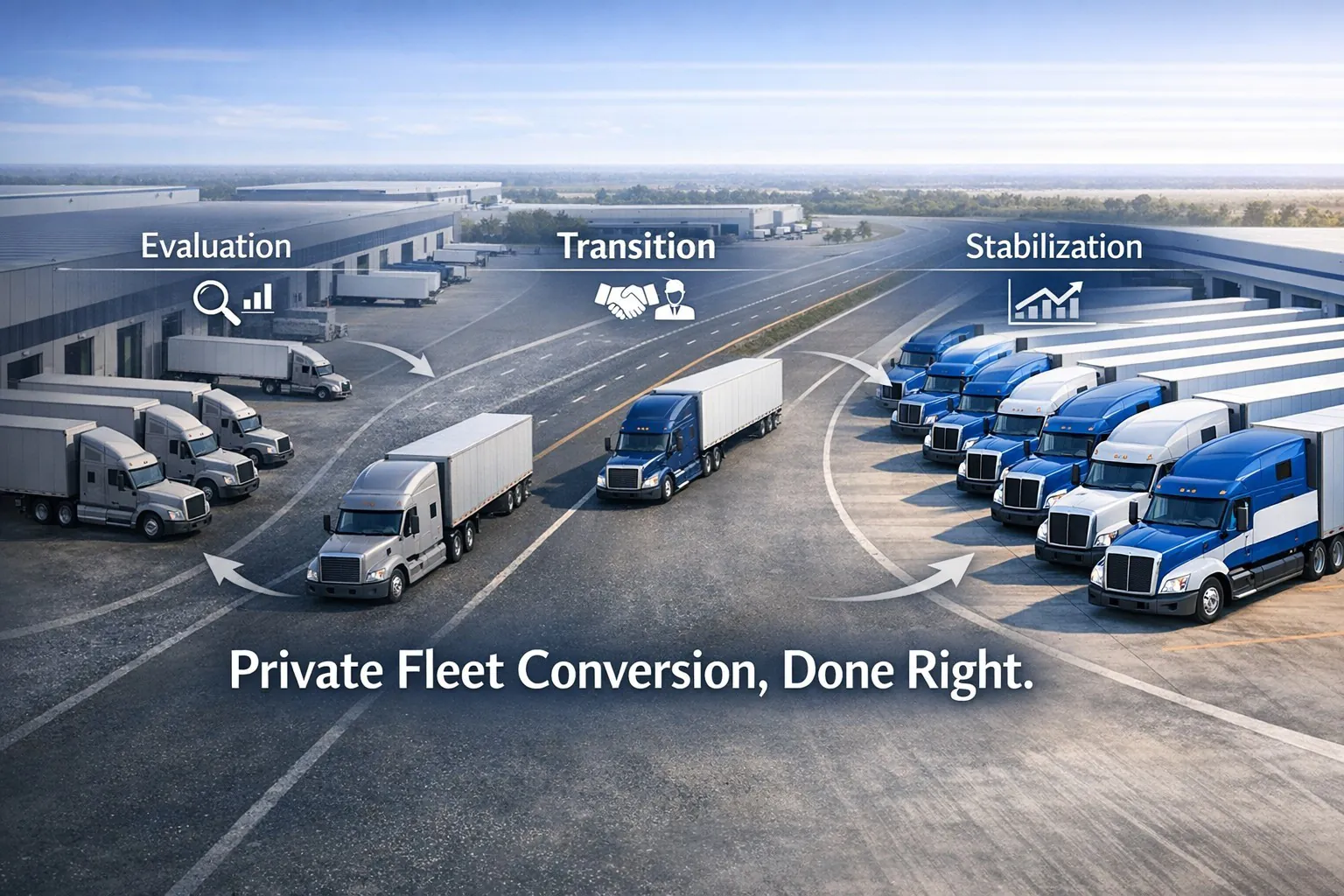
Keller has built a reputation for executing fleet conversions without disruption, thanks to a disciplined process that blends deep operational expertise with strategic change management. Every conversion follows a structured three-phase model: Evaluation, Transition, and Stabilization—delivering continuity, clarity, and confidence at every step.
A successful private fleet conversion starts long before the first truck moves. Keller’s evaluation process provides the visibility and certainty leaders need before making the transition official.
1. Operational Diagnostics
Keller conducts a full analysis of the current fleet landscape, including:
This diagnostic becomes the foundation for your customized conversion plan.
2. Risk & Continuity Mapping
Keller identifies potential vulnerabilities—service-critical lanes, customer-specific constraints, facility challenges—and outlines mitigation paths to ensure smooth continuity from Day One.
3. Stakeholder Collaboration
Keller works directly with operations, finance, HR, and safety teams to define success criteria, align expectations, and build clear communication channels for the transition phase.
Outcome: A detailed, executive-ready conversion plan that addresses operational realities, risk scenarios, and value opportunities.
This is where Keller’s process-driven reputation truly shines. Keller executes private fleet conversions through a meticulously staged transition model that prioritizes service continuity and driver trust.
1. Driver-Centered Onboarding
Keller treats drivers as the heart of any conversion. Their approach includes:
This proactive engagement significantly strengthens retention and operational stability.
2. Equipment Strategy & Asset Integration
Keller evaluates whether to:
Simultaneously, Keller ensures DOT compliance, maintenance alignment, and technology installation (ELDs, telematics, cameras) before go-live.
3. Seamless Operational Deployment
A Keller transition team works onsite to manage:
Every detail is choreographed to maintain service levels with zero operational downtime.
Once the fleet is live, Keller’s work doesn’t stop. The stabilization phase ensures performance consistency and continuous optimization.
1. Performance Monitoring
Keller tracks early-stage KPIs daily—safety, service reliability, on-time percentages, hours-of-service compliance, and cost performance—making adjustments in real time.
2. Continuous Driver Support
Keller reinforces a people-first culture with:
This stabilizes morale, performance, and long-term retention.
3. Continuous Improvement Planning
After the initial stabilization window (usually 60–90 days), Keller delivers a performance analysis and identifies opportunities for:
This ongoing refinement makes the conversion not just successful—but transformative.
Keller’s private fleet conversion methodology works because it blends:
Most importantly, Keller’s commitment is simple: no disruption, no compromise, no surprises.
For organizations considering whether it’s time to shift from a private fleet to a dedicated partnership, Keller offers a proven path forward—one built on stability, transparency, and operational excellence.
Learn more about what makes Keller Logistics Group and its affiliates the best choice for your company’s 3PL logistics needs. Contact us to learn more about our services and request a no-obligation quote. Call 419-780-3767 or return our online contact form today.