

The Hidden Costs Behind the Wheel
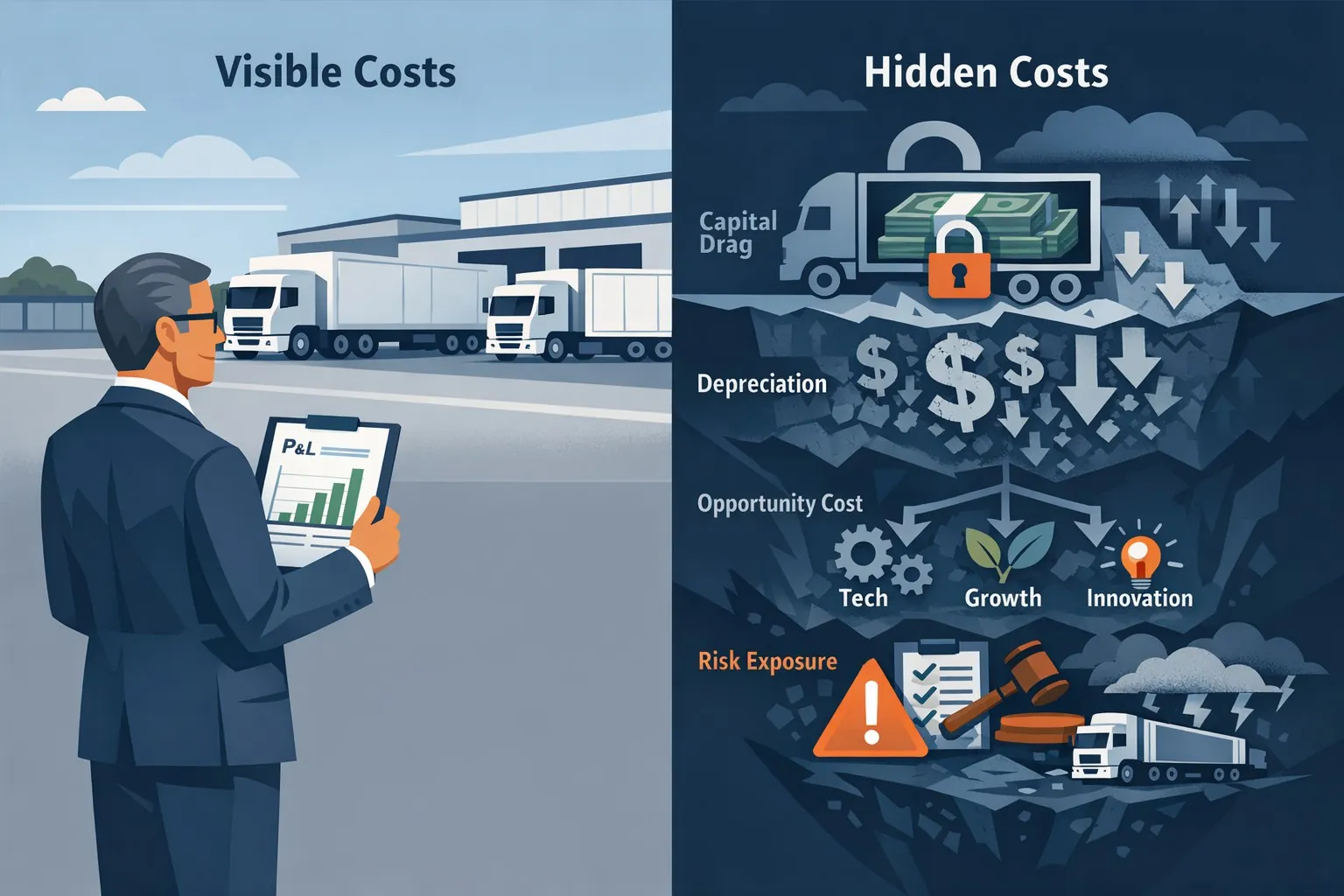
For finance leaders, transportation often looks straightforward: trucks, drivers, fuel, maintenance. But private fleets carry costs that rarely show up on a simple P&L. These hidden factors—capital drag, depreciation, opportunity cost, and risk exposure—can quietly erode margins and tie up resources. Understanding the fleet total cost is critical for making informed decisions.
The Capital Drag of Asset Ownership
Owning trucks means locking up significant capital in depreciating assets:
This capital could be earning returns elsewhere—funding growth, technology, or market expansion.
Opportunity Cost: What Else Could You Do With That Capital?
Every dollar tied up in fleet assets is a dollar not invested in:
Private fleets often look like operational necessities, but they represent strategic trade-offs.
Risk Exposure: The Unseen Liability
Owning a fleet means owning the risk:
These risks don’t just impact operations—they create financial unpredictability.
The Fleet Total Cost Equation
When CFOs evaluate transportation, they often focus on:
But the real equation includes:
Ignoring these factors leads to underestimating the true cost of ownership.
Private fleets aren’t just trucks—they’re financial commitments with hidden drag. For CFOs, understanding fleet total cost means looking beyond the P&L and factoring in capital allocation, risk exposure, and strategic flexibility. The question isn’t just What does it cost to run trucks?—it’s What does it cost to own them?

Learn more about what makes Keller Logistics Group and its affiliates the best choice for your company’s 3PL logistics needs. Contact us to learn more about our services and request a no-obligation quote. Call 419-780-3767 or return our online contact form today.