How to Recognize When It’s Time for a Fleet Strategy Review
Transportation is one of the few parts of a business where yesterday’s decisions hold enormous influence over today’s performance. Routes evolve, customer expectations shift, networks expand, and labor markets change—but many organizations continue operating with fleet strategies designed for a business that no longer exists.
That’s why high-performing companies routinely conduct a fleet strategy review—a structured evaluation of whether the fleet still supports cost, service, and growth goals.
But how do you know when it’s time to take a closer look?
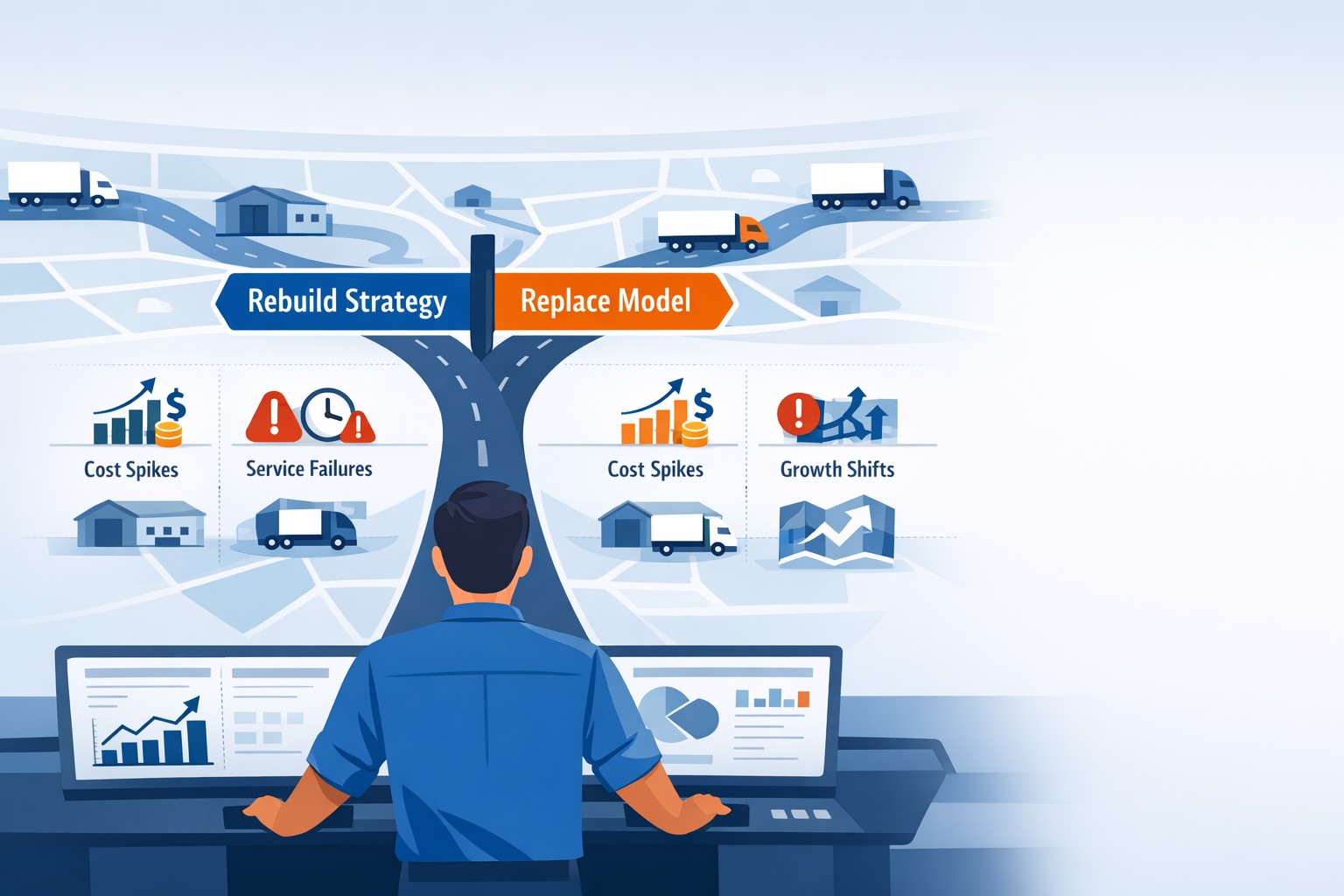
Across industries, three trigger points stand out: cost spikes, service failures, and business growth shifts.
This guide helps leaders recognize these signals early and understand what they mean for fleet planning.
1. Cost Spikes: When Your Fleet Becomes More Expensive Than It Should Be
Costs rarely jump without a reason. When fleet expenses rise faster than volume or complexity, it’s a clear signal that your strategy needs attention.
Common Cost Warning Signs
- Maintenance expenses climbing disproportionately—often tied to aging assets, inefficient routing, or inconsistent preventive maintenance.
- Higher cost-per-mile due to underutilization or idle equipment.
- Unexpected overtime driven by poorly aligned schedules or driver shortages.
- Rising insurance or safety-related costs indicating increased risk exposure.
- Growing reliance on spot carriers because internal capacity can’t meet demand.
These aren’t isolated issues—they’re structural indicators.
Cost spikes tell you one thing:
Your fleet may no longer match the network you’re running today.
A fleet strategy review uncovers whether costs are driven by:
- right-sizing gaps,
- route inefficiencies,
- equipment replacement needs,
- or an outdated operating model.
2. Service Failures: When Reliability Starts Eroding
Every business has occasional misses. But when service failures become patterns—late deliveries, missed windows, inconsistent route times—it’s more than an operational issue. It signals a fleet misalignment.
Service Failure Patterns That Trigger Review
- On-time performance slipping across multiple routes, not just one.
- Seasonal peaks that repeatedly overwhelm the fleet.
- Customers reporting variability in delivery experience.
- Drivers stretched thin, leading to rushed work or burnout.
- Increased rescheduling or last-minute adjustments due to capacity gaps.
When service becomes reactive instead of consistent, the fleet is no longer supporting the business—it’s straining it.
Service failures often trace back to:
- network drift (routes no longer match actual demand),
- outdated productivity assumptions,
- driver shortages,
- or insufficient capacity strategies for peak periods.
A fleet strategy review brings structure and data to diagnose which underlying issues are harming customer experience.
3. Growth Shifts: When Your Business Outpaces Your Fleet Design
The most successful companies often outgrow their original fleet strategy without realizing it. Changes in volume, product mix, network footprint, or customer commitments can quickly make once-efficient fleets obsolete.
Growth Shifts That Should Trigger Review
- Opening new markets where existing resources cannot scale.
- Expanding product lines that change delivery patterns, payloads, or stop complexity.
- New customer commitments with stricter SLAs or delivery windows.
- Facility changes, such as new DCs, production plants, or consolidation.
- Unexpected surges in demand—even positive ones—that exceed fleet structure.
Growth is good.
But growth without strategic fleet alignment leads to inefficiency, excessive cost, and operational risk.
A fleet strategy review helps leaders determine:
- whether to expand assets,
- redesign routes,
- augment with dedicated or supplemental capacity,
- or shift toward a more flexible operating model.
Rebuild or Replace? What Leaders Should Consider
Once the trigger points appear, the next step is deciding whether to rebuild the existing strategy—or replace it with a new model.
Rebuild When:
- The core fleet still fits your network.
- Inefficiencies stem from drift, not structural misalignment.
- Technology or process improvements can restore performance.
- You have strong driver stability and manageable maintenance exposure.
Rebuilds typically focus on:
- route redesign
- scheduling adjustments
- productivity modeling
- equipment refresh planning
- enhanced visibility tools
Replace When:
- Fixed costs are consistently outpacing value.
- Seasonal swings create sustained idle assets or unmet peak demand.
- Recruiting and retention are limiting capability.
- Fleet performance requires more resources than it returns.
- The business needs a more scalable or flexible transportation model.
Replacement doesn’t mean abandoning control—it means adopting a structure aligned with the outcomes you need (e.g., a dedicated fleet, hybrid model, or supplemental capacity strategy).
The Most Important Insight: Strategies Age Faster Than Fleets
A truck can last 7–10 years.
A fleet strategy rarely should.
As customer expectations rise and networks evolve, transportation models must be reviewed regularly—not only when something is visibly broken.
A well-timed fleet strategy review prevents:
- financial surprises,
- service erosion,
- and operational firefighting.
It replaces guesswork with clarity and positions the business to scale confidently.
Look Into Strategy Options